-
Product Overview
Learn about key capabilities and use cases of products.
-
Developer Learning Center
Obtain the developer-tailored learning materials and development path.
NaaS
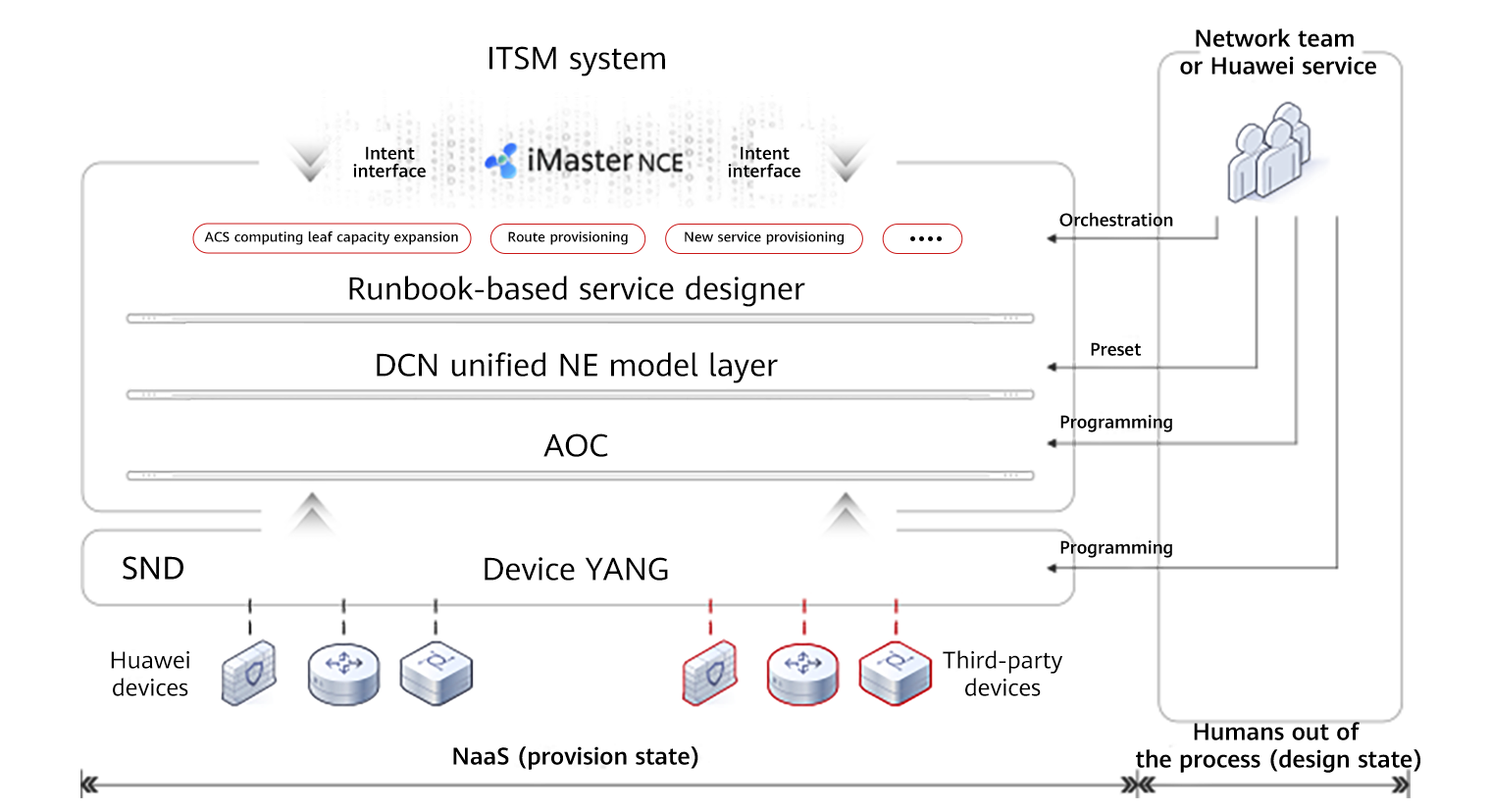
NaaS provides southbound and northbound open programmability capabilities to support flexible service orchestration as well as unified management and control of multi-vendor devices. In this way, developers can quickly complete network orchestration to adapt to service changes, even without professional coding capabilities.
Key Features
-
Runbook
-
AOC
The runbook provides service-oriented network service integration. It supports visualized workflow orchestration based on RESTful APIs, and provides capabilities such as dry run, simulation, and full-process rollback, implementing service rollout within minutes.
Learn MoreThe AOC provides E2E southbound open service capabilities. Based on the YANG model, it supports device driver programmability, as well as unified deployment and simulation of hardware SDN, software SDN, traditional networks, and multi-cloud and multi-vendor networks, supporting zero-breakpoint orchestration of complex services.
Learn More- Day 0: Planning and Design
- Day 1: Service Provisioning
- Day N: Maintenance and Monitoring
Day 0: Planning and Design
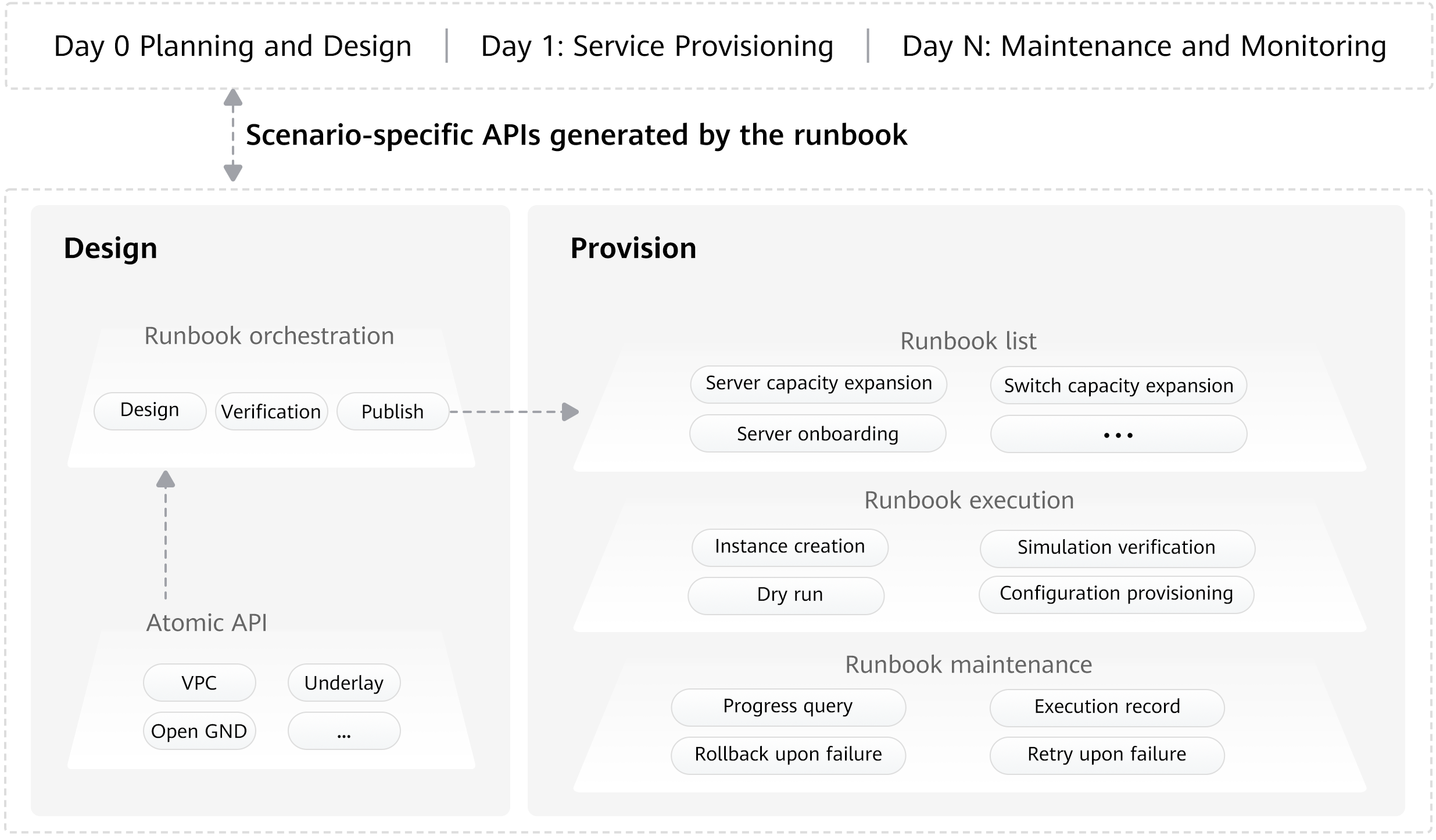
lanning and Design Provides the open configuration capability before overlay service provisioning to implement fast network deployment and construction
iMaster NCE-Fabric provides the runbook capability to design and verify Day 0 work orders in advance. It then publishes them as northbound RESTful APIs so that third-party systems can complete Day 0 services such as switch capacity expansion, server capacity expansion, and server onboarding.
Day 1: Service Provisioning
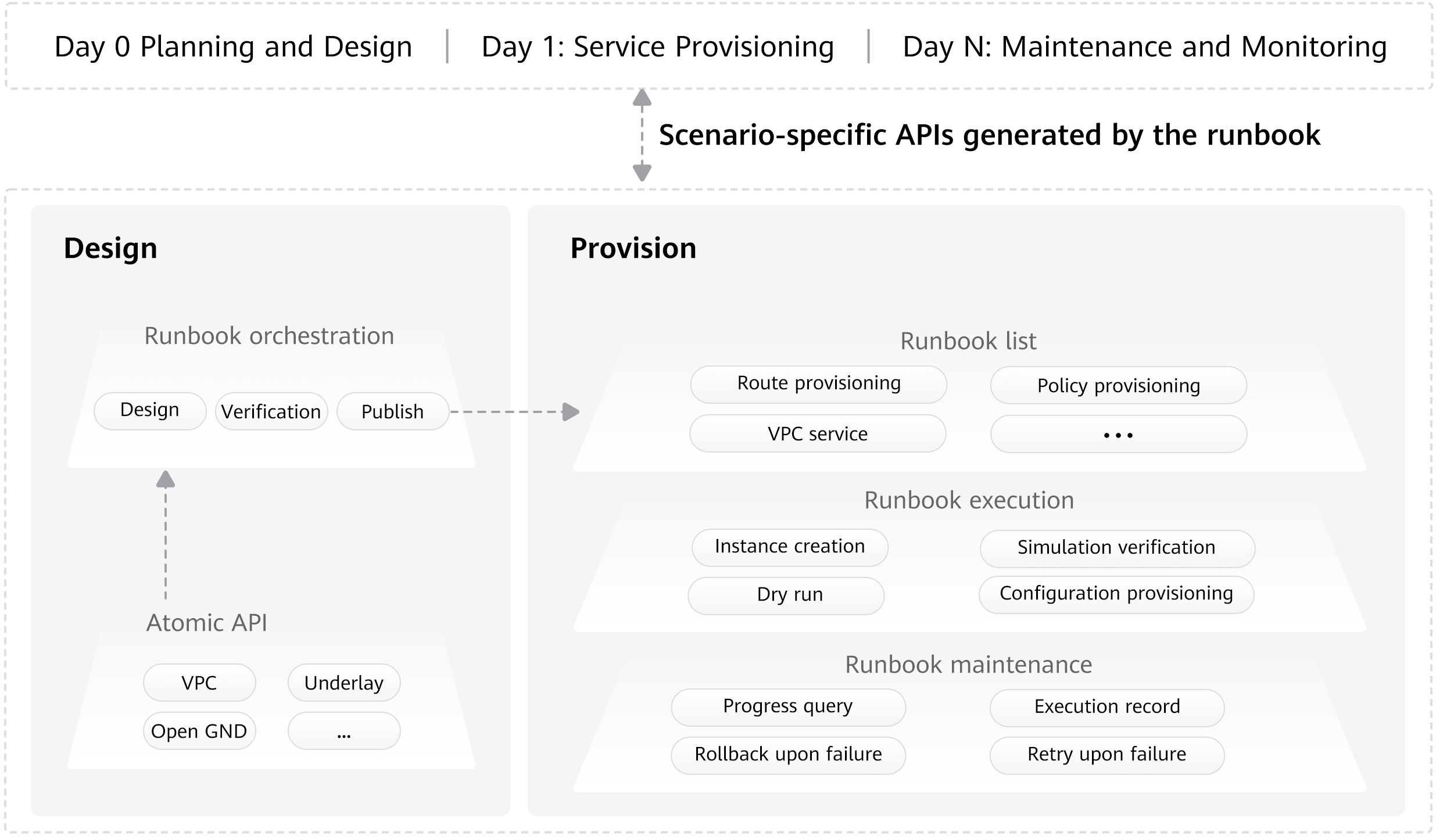
Provides open atomic interfaces for service provisioning so that third-party systems can implement dynamic provisioning based on network resources.
iMaster NCE-Fabric provides the runbook capability to design and verify Day 1 work orders in advance. It then publishes them as northbound RESTful APIs so that third-party systems can complete Day 1 services such as route provisioning, policy provisioning, and VPC configuration.
Day N: Maintenance and Monitoring
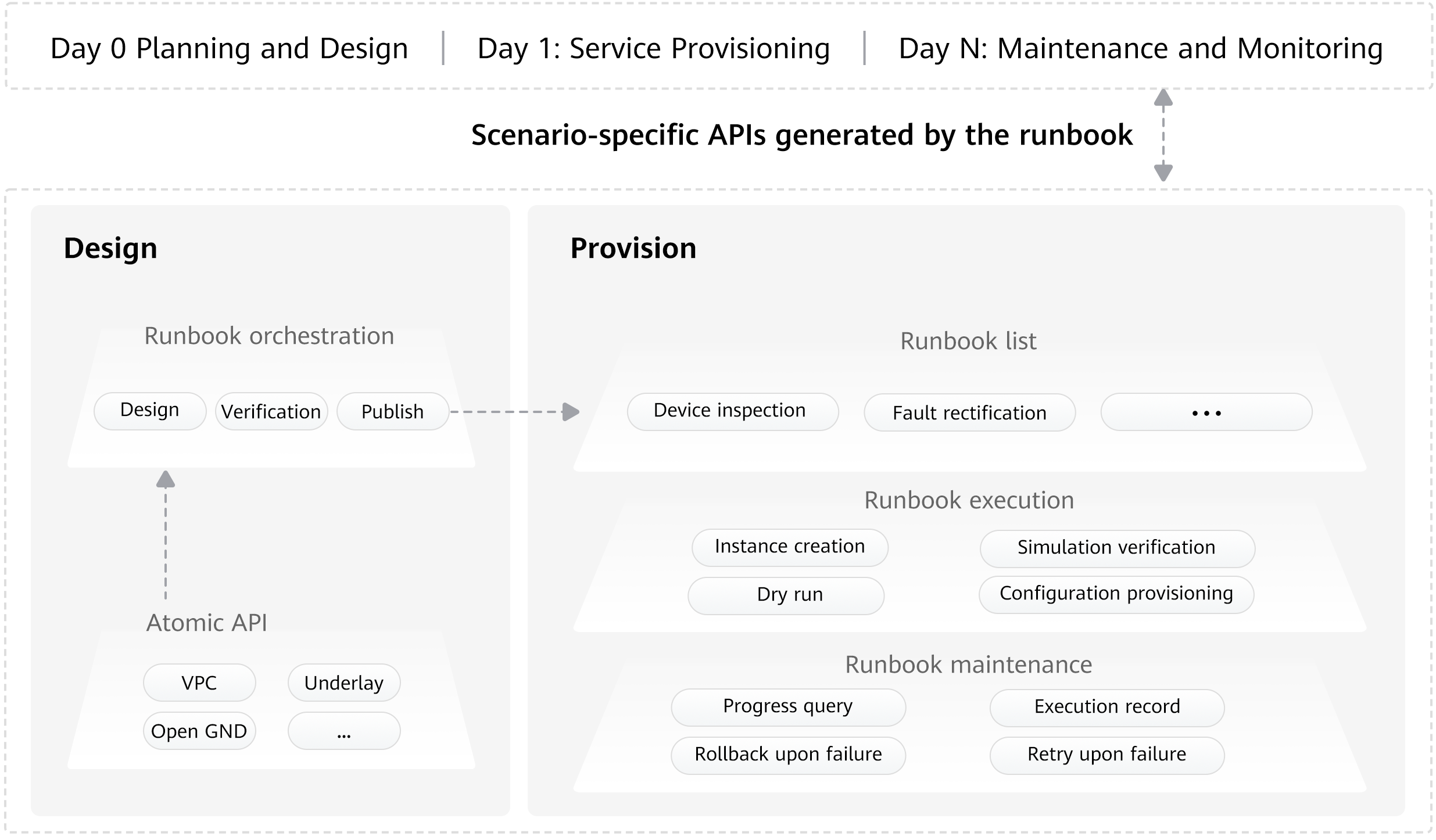
Provides open atomic interfaces for maintenance and monitoring so that third-party systems can ensure stable running after function rollout.
iMaster NCE-Fabric provides the runbook capability to design and verify Day N work orders in advance. It then publishes them as northbound RESTful APIs so that third-party systems can complete Day N services such as device inspection and fault rectification